

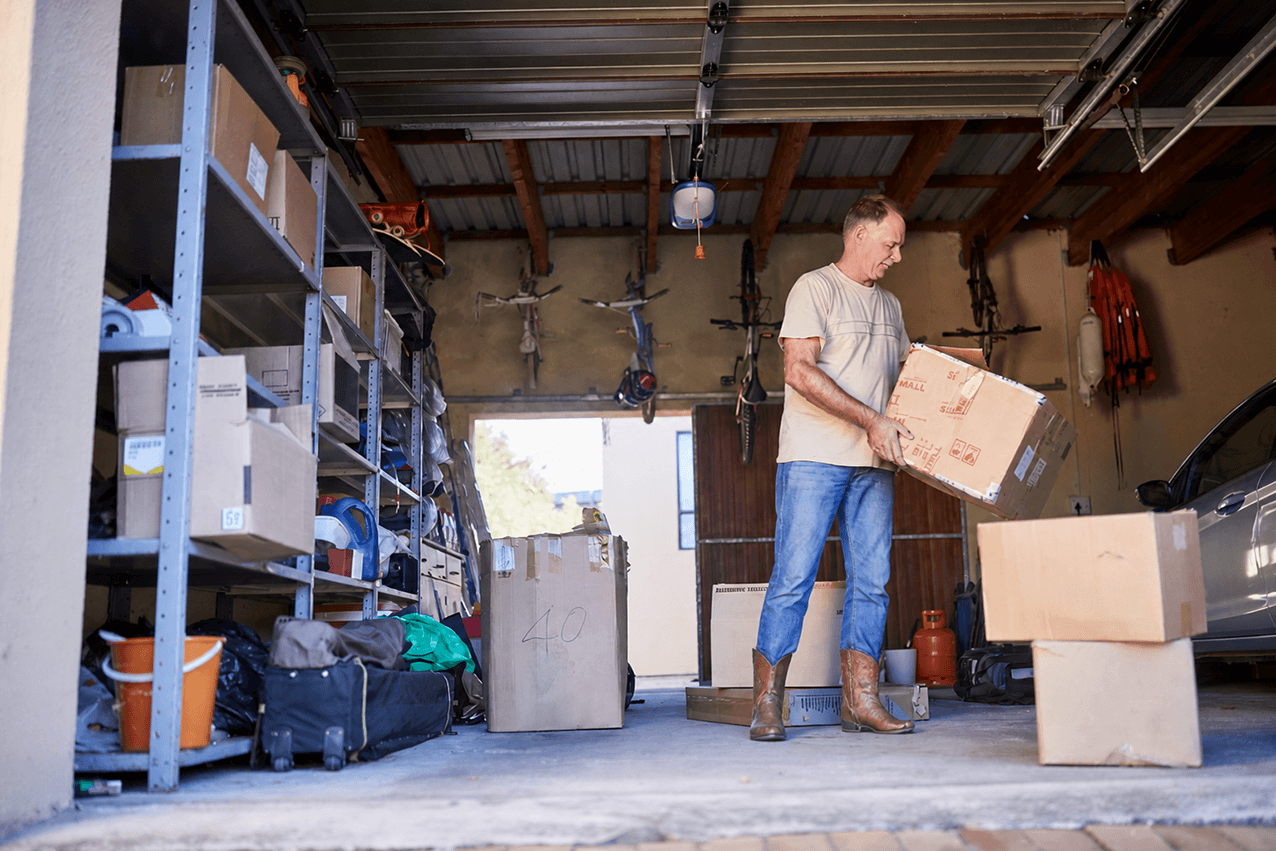
The box says “garage, misc.” It went in next to the water heater in June. Nobody opens it until September… and that’s when the family finds out that Texas heat has been working on their items all summer.
They say everything is bigger in Texas, and that includes high temperatures. Almost all the advice out there about protecting your belongings from heat is written for moving day. It’s understandable, since that’s when people are loading in the hot sun. But protecting your items from heat damage is also important while you’re packing and staging in the garage or storing items in the attic after the move.
A white glove moving service (also called turnkey, end-to-end, or full service moving) catches the box marked “misc” before it spends a June in the garage and knows which room in the new house it should have gone to instead.
Why Doesn’t Heat Damage Show Up Until Months Later?
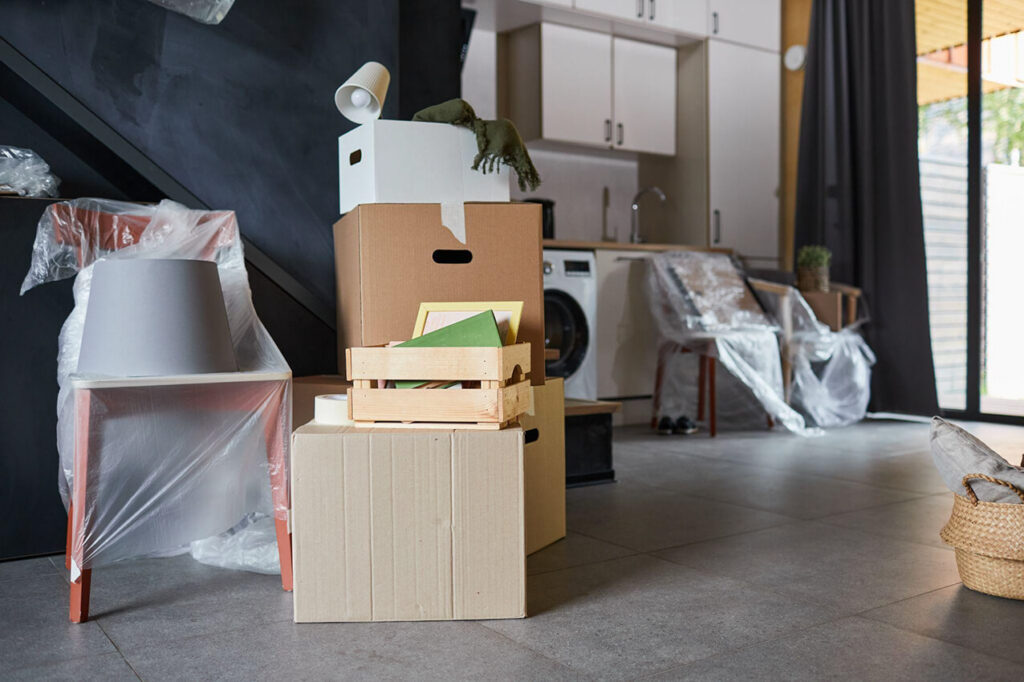
Heat damage isn’t always as obvious as other forms of damage. When you drop and break a plate, you hear it. A leak soaks a rug and you see it. Heat works on the inside of your things, quietly, and the damage might not show up until later.
A Central Texas afternoon between June and September usually lands somewhere in the nineties, with a run of days past a hundred (and any closed space in the sun runs even hotter). Over weeks at that temperature, the ordinary materials holding your belongings together can start to give. Glue loosens its grip. Plastic softens and takes a new shape. Coatings lift off the surface they were bonded to. Wood swells when the air is humid and shrinks when it’s dry.
This is especially tricky, because that damage may not show through a sealed box. A box may look fine in June and August, but you realize the damage when you open it in October.
That delay is why it’s worth taking steps to prevent heat damage sooner rather than later.

How Hot Does a Garage Get in a Texas Summer?
Most Texas garages are rooms with no temperature limit and a door that faces the sun. Garages hold heat overnight instead of shedding it, which can make the space hot enough to damage items. Anything you put in there for a season sits at that temperature the whole season.
Many items are fine out there, but here are six things to keep out of the hot garage:
- Candles, wax melts, and anything with a cream or balm texture.
- Anything electronic, from the good laptop down to the drawer of chargers you keep meaning to sort.
- Records, tapes, film, slides, and loose prints.
- Instruments, especially anything wooden or glued.
- Quilts, linens, and upholstered pieces, since warmth and trapped humidity can lead to mildew.
- Paint, aerosols, and fuel.
Everything on that list has a working part that heat softens, which is how a garage full of “just boxes” turns into a real loss.

Is a Hot Attic Safe for Photos, Tapes, and Records?
The attic is where most households put the box of photographs, and it’s the place they’re the most likely to be damaged.
Photographs require a steady temperature under seventy-five degrees to prevent damage. Tapes should be stored at fifty-five to seventy degrees with the humidity held in a thirty to fifty-five percent band. A Texas attic in August or September gets far hotter than that, and its humidity swings well outside that band. The National Archives recommends keeping home collections out of any space with an unregulated climate, and names the attic and the garage as its examples.
The hard part is that a tape may look perfectly normal… right until you decide to play it. Damage often goes undiscovered until a milestone birthday, a memorial, or a wedding where somebody wants to play the old footage.
A good rule of thumb is that if you’d put it in the car to escape a natural disaster, it shouldn’t be stored in the attic. Our guide for protecting heirlooms during a move covers other irreplaceable items.
What Happens to Candles and Makeup in a Hot Garage?
Candles and makeup are usually among the cheapest items packed in a box, and they’re often tossed into a miscellaneous box because it still had space. But these kinds of items can do a lot of damage to everything around them.
A candle left in summer heat melts, pools, and hardens again onto whatever it was sitting on. Cream cosmetics break down into an oily layer and a gritty layer of color that never mix again, no matter how much you stir. Wax melts turn into a single block. Replacing the candle costs a few dollars. Replacing the tablecloth, the certificate, or the framed photo that shared the carton with it usually costs a great deal more.
Can a Move From the Coast Damage Wood Furniture?
Heat and humidity can damage wooden furniture even when nothing is dropped or packed incorrectly.
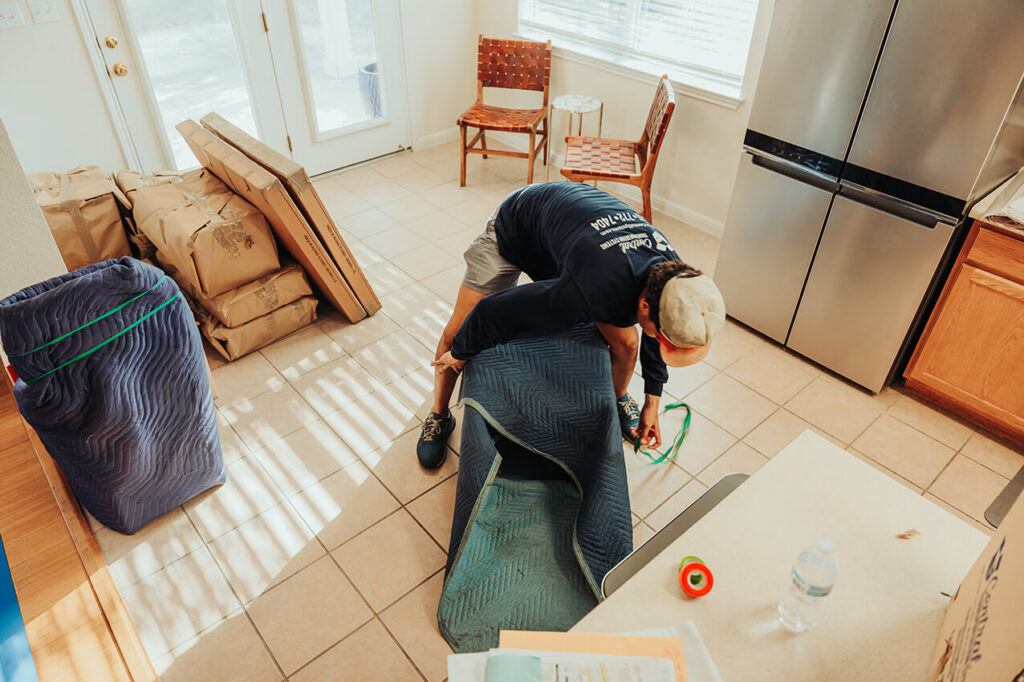
This is because wood balances itself against the air around it. A hutch that spent twenty years in a Houston dining room is carrying the moisture of a Gulf Coast house. Set it down in Georgetown or Round Rock, and it starts releasing that moisture. Doors stop closing flush, a seam opens in a tabletop, and veneer starts to lift at a corner. Nobody dropped anything.
If you’re moving a valuable piece of wooden furniture:
- Let a piece live in the new house for a few weeks before you tighten a single screw or write it off.
- Keep it away from exterior walls and direct sun while it finds its balance.
- Don’t use the garage as its waiting room, since that’s the harshest place for it during the weeks it’s most sensitive.
Antiques and inherited pieces need the most patience, because their joints are doing structural work that modern glue and hardware handle differently. Your full-service moving team can create a custom crate for items like these, as well as transport and store them safely.

What Should Ride in the Car Instead of the Moving Truck?
A truck trailer is sealed metal with no air conditioning, and by afternoon it’s warmer inside than the parking lot. Most items are fine in this kind of environment. A small number of things need different handling.
Two questions can help you sort out which items should come with you in the car or in a climate-controlled environment: Would losing it be permanent? Would it change shape in a warm room? Anything that answers yes to either might be safer in the cabin with you.
In practice that’s a small pile: the family photographs and home video, whatever medication is on a schedule, the laptop and any drive holding the only copy of something, and the wax and cream products that ruin their neighbors on the way out. Add the few small things you’d name on an insurance form.
If you’re already building a first-night essentials box, this is the same idea applied to the things heat can reach.
If you’re unsure whether an item needs to be transported in a climate-controlled environment, talk with your move consultant. They can help you know for sure, and offer solutions for temperature-sensitive or fragile items.
What Does Climate-Controlled Storage Actually Protect?
Most items in a household are actually fine without climate control. Climate-controlled storage is important for things like older wood furniture, vinyl and magnetic tape, photographs, electronics, and instruments. Dishes, cookware, tools, and most metal and plastic furniture sit in a standard, secure warehouse with no conditioning and come out fine. So the useful question is which part of your household needs conditioning, not whether to condition all of it.
Climate-controlled storage holds temperature and humidity inside a narrow band, so wood stops swelling and shrinking, adhesives stay put, and media isn’t sitting at a hundred-plus degrees every afternoon of the summer.

How To Keep Your Items Protected from Heat Damage
It’s important to feel confident that your items will be safe before, during, and after your move. That’s where the professional packing and storage of a full-service move can take that off your plate. White glove movers make sure boxes are packed safely and correctly, using materials built to withstand a Texas summer.
Here at Central Transportation Systems, we can handle the packing, transport, and storage as one job instead of three you line up yourself. Your move consultant can help you decide which items need conditioned space for storage and transport, and which don’t. A move already asks a lot of you: a new place to settle into, a routine to rebuild, and a garage that might or might not still be packed from the move. Protecting your belongings from the Texas heat shouldn’t be another worry on your mind.
Moving soon, or looking for safe storage for your items? We’d love to help make sure your belongings are safe from the Texas heat. Contact Central Transportation Systems today.
Frequently Asked Questions
Candles and cosmetics can legally ride on a summer moving truck, but they shouldn’t. A sealed trailer runs hotter than the outside air, and melted wax or separated cream moves through a carton and reaches whatever else is inside it. Both belong in the car with you, along with medication and anything holding family photos or video, and a Central Transportation Systems Move Consultant can help you know before packing day.
There isn’t a safe window with a number on it, because damage tracks sustained temperature rather than days. A garage holds afternoon heat overnight, so items stored through even one Texas summer have been at elevated temperature continuously for roughly three months. Wax and magnetic media react soonest.
Electronics need to travel out of the heat on a summer move, because heat shortens the life of batteries and can warp plastic housings and loosen internal adhesives. The damage often shows up later as a device that no longer holds a charge. Keep laptops, drives, and anything holding your only copy of a file in the air-conditioned cabin of your vehicle.
Regular storage protects belongings from theft, weather, and pests, while climate-controlled storage adds temperature and humidity regulation. That regulation keeps conditions from swinging, which is what matters for wood furniture, photographs, media, instruments, and electronics, since those react to the swing between hot and cool rather than to exposure alone. Ranges vary by building, so ask what a given facility holds.
Climate-controlled storage earns its cost when the load includes photographs, film or tape, vinyl, electronics, instruments, or older wood furniture, since those are damaged by the swing between hot and cool rather than by heat alone. For dishes, tools, and most furniture, a secure warehouse with no climate control is usually plenty. The question is the inventory rather than the whole shipment, which is why Central Transportation Systems goes through yours with you before you pay for conditioned space.
Mold is far less likely in climate-controlled storage, though not impossible. Mold needs moisture, and climate control holds humidity in a band where it struggles to establish. What conditioning can’t fix is something packed damp. A carton sealed while anything inside was still wet, or upholstery stored before it dried, can grow mold in any building.

Eric Barker is the Vice President of Commercial Services at Central Transportation Systems and a recognized voice in the moving and relocation industry. With over a decade of experience in military household goods logistics, operations, and commercial moving services, Eric has played an active role in shaping conversations around the future of PCS (Permanent Change of Station) moves and military relocation policy. He currently serves on the board of the Southwest Movers Association and the IAM DAB DMV (International Association of Movers, Distinguished Agents Board, DMV chapter), reflecting his ongoing commitment to industry leadership and standards. He recently joined industry leaders at the 50th Annual Dispatchers Convention to discuss the major structural changes affecting military moving in 2026. Through his leadership and operational expertise, Eric helps ensure military families receive reliable, efficient, and professionally coordinated moving services during periods of significant industry transition.