


Do you or your partner need to move for work before the rest of the family can follow?
Maybe your partner is starting a job while you’re finishing the school term or waiting for the house sale. One of you is still making meals and doing laundry in one place, while the other is learning where the nearest grocery store is and trying to get the internet set up.
For a few weeks, you’re running two households with different needs. That takes planning for the weeks apart and the family’s arrival. What will everyone need at the current home, and what should be ready at the new one?
This family relocation checklist covers what to keep unpacked at your current home, what to prepare at the new address, and how to coordinate until everyone arrives.
For a printable timeline of moving tasks, download our free moving checklist (PDF). Use it as a starting point, then adjust the dates for each family member’s departure.

What should stay unpacked at your current home?
Packing the saucepan you use every evening can leave you reopening boxes to make dinner. Before packing a room, check what the family members staying there will need until their moving day:
- Meals: Enough plates, utensils, and cookware to prepare and eat everyday meals. Pack the serving dishes you rarely use first.
- Sleep: Beds, bedding, and pillows for everyone still sleeping at the house. Start with an unused guest room instead of an occupied bedroom.
- Work: Computers, chargers, and other equipment needed to keep working from home.
- Clothes and laundry: Enough clothes for work and days off between laundry loads, plus detergent and a laundry basket.
- Evenings and weekends: Books, games, and other belongings the family uses to relax. If children or pets are staying, keep their everyday supplies and familiar comfort items accessible, too.
Set aside smaller everyday items (like phone chargers, medications, toiletries, and your child’s favorite bedtime toy), and show anyone helping with packing where to leave them. Pack less-used belongings (such as holiday decorations, serving platters, and out-of-season clothes) while keeping the saucepan, work laptop, and bedding available until moving day.
You can also hand the packing over to a white glove moving service (also known as turnkey, full service, or end-to-end moving). Walk through the essentials with your Move Consultant so the packing plan leaves them available until the family is ready to go. Professional packers can handle the other belongings, so that the partner still at home has less packing to fit around meals, work, and family routines.

How can you coordinate plans from different cities?
A quick phone call can settle a decision, but it’s easy to forget the details while each of you is doing something else. Keep the moving dates, delivery details, and tasks each of you is handling in a shared document or phone note you can both open and update.
It’s easier to find details (like “Sam will meet the movers Tuesday”) when that info isn’t in a long, running text conversation. Use the shared note to record the latest delivery arrangements, who has the new house keys, and where the family will sleep if the furniture hasn’t arrived. Don’t forget to mark changes clearly so an old plan doesn’t get mistaken for the current one.
It’s also helpful to set aside a brief check-in time when there’s something to decide. One person might need to check an entry code; the other might know whether the freezer still has a week’s worth of meals in it. Use the conversation to resolve those specifics.
Make sure your Move Consultant has the dates each home will be occupied, the person receiving delivery, and any changes to access. They can coordinate the agreed packing and delivery arrangements and explain how a change affects the moving plan. You and your partner can keep your shared note for household decisions without having to organize each part of the moving work yourselves.

What can your partner prepare at the new home before the family arrives?
If you or your partner can get into the new home before the rest of the family arrives, check that the keys work, the utilities are on, and there’s somewhere for everyone to sleep.
Before the family arrives, work through these preparations together:
- Check entry instructions, keys, parking, and a clear route from the door.
- Test lights, water, and the appliances you expect to use immediately.
- Find out whether beds and bedding will be available on arrival night.
- Set out towels and basic bathroom supplies where they’re easy to find.
- Plan a simple first meal that doesn’t depend on unpacking the kitchen.
A short video call can show you what’s ready and what needs another plan. Looking at the bedrooms together may answer more questions than asking whether the house is “mostly set up.”
If the family will first join your partner in temporary housing, prepare that space for everyone’s arrival. Keep the arrival arrangements realistic for the space you’ll actually have, rather than the home you expect to occupy later.
Your partner doesn’t have to unpack the house alone before everyone arrives. With white glove moving, you can include unpacking and home setup in the services you book. Talk through which rooms you’ll use first, so you can arrange help with bedrooms and the kitchen while your partner handles the preparations that need their attention.
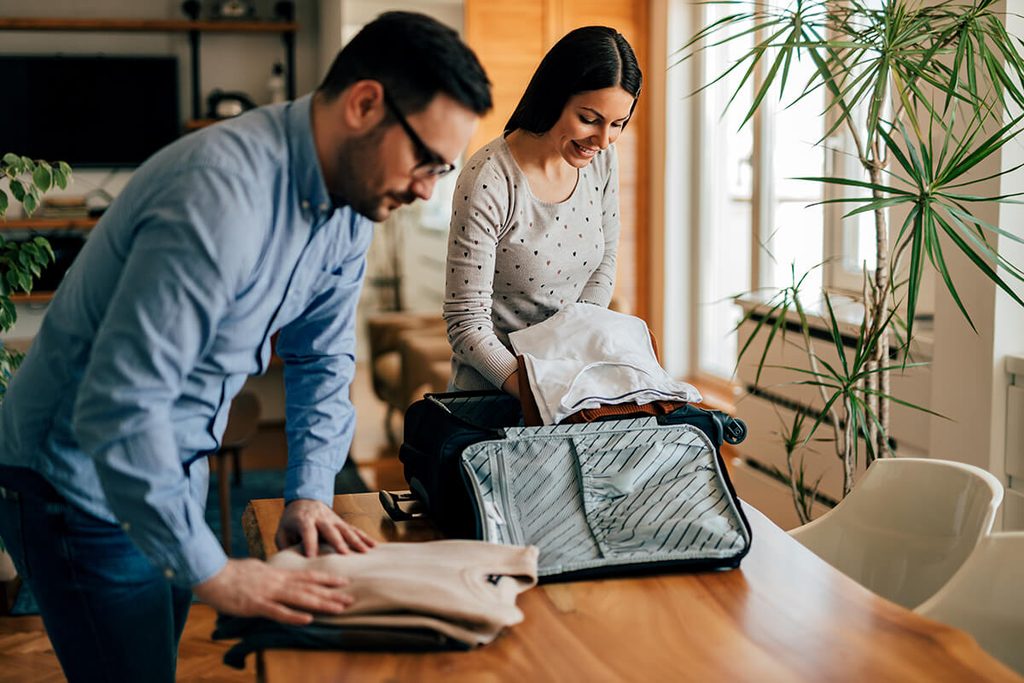
What should you pack in your family’s first-night bag?
A long drive can end with everyone too tired to search for a toothbrush. Pack the belongings you’ll need between arriving and going to bed so you can reach them without finding the right carton first.
Start with changes of clothes, toiletries, medications, and chargers. Add something for breakfast if the journey gets you in late. For a child, a familiar bedtime item can be more useful that evening than a box of toys. Include pet supplies if an animal is traveling with you. Remember to keep IDs, important moving paperwork, and keys with you, too.
Keep that bag with you during the trip. Labeling a carton “first night” helps with identification, but it doesn’t make the carton accessible before the household goods arrive.
Review what your partner has already bought or brought. Two sets of basic towels might be useful across the two addresses. Two new coffee makers may be an expense you could avoid with a quick conversation (unless you’ve both decided the extra one is worth it).
How do you plan around arrival and delivery dates?
Your family’s travel arrangements and the mover’s delivery arrangements may follow different schedules. Compare them before deciding what the first few days will look like. In your shared note, list each person’s travel date, packing and pickup dates, the delivery date or window, who will receive the shipment, and where everyone will sleep if delivery comes later.
Ideally, someone can let the movers into the new home and receive the furniture before the rest of the family arrives. But that’s not always possible. If your family arrives first, decide where you’ll sleep and how you’ll handle meals until the furnishings are available. If delivery comes first, identify who will meet the crew and answer placement questions.
Share a simple room plan with that person. A label saying “bedroom” may be unclear in a house with several bedrooms. Agree on room names and match them to the carton labels so the person at the destination can give useful directions.
Keep the mover’s current contact details in your shared note. When a date changes, discuss its effect on both addresses before changing travel, access, or service arrangements.

Where can your furniture go if the new home isn’t ready?
A temporary apartment may have room for your travel bags but not the family’s furniture. Or you may need to hand over the old house before you have access to the new one. If there’s a stretch during your move where your belongings need storage, ask your Move Consultant about warehouse storage as part of the moving plan.
A mover offering warehouse storage can pack and transport your belongings, hold them in their secure storage facility, and deliver them to the new address when you’re ready for them. That way, you don’t have to rent a separate storage unit or transport your belongings to and from it, which may require multiple trips.
If your move has storage needs, make sure to discuss:
- What needs to stay with you: Keep travel bags and daily essentials accessible rather than sending them into storage.
- How long you expect the gap to last: Review short-term or long-term options and what happens if your dates change.
- How delivery will be arranged: Confirm access, who’ll receive the belongings, and the available delivery timing.
- What the plan will cost: Ask for the storage and later delivery charges before agreeing to the service.
Storage can be coordinated with the packing and transport in your white glove moving plan, giving you one contact for the household goods while you arrange where the family will stay.
What should you check before handing over the old home?
On your final morning at your old home, you still need electricity, water, and cleaning supplies. Plan shutoff dates around the actual handover, and check the requirements with the relevant providers or property contact.
Before leaving, walk through the rooms, closets, and outdoor storage areas. Compare the remaining belongings with your travel list. Keep keys and access devices separate from packed possessions so you can hand them over as agreed.
Send your partner the latest travel plan once you’re ready to go. Then you can arrive knowing where you’ll sleep and which essentials are waiting, rather than trying to answer those questions from the driveway.

How can white glove moving help both stages of your move?
A staggered move can feel like two moves back to back. With help handling the packing, storage, and delivery, you can spend less time managing moving details and more time helping your family adjust.
A white glove moving service can take packing, transport, unpacking, and home setup off your list. Your Move Consultant can also arrange storage when the move-out and move-in dates don’t line up. Agree on the work included in your estimate, the essentials that need to stay with the family, and who’ll meet the crew at delivery.
Central Transportation Systems offers short-term and long-term warehouse storage alongside household moving services. We’d be glad to build a plan for the weeks you’re living apart, including packing help, a place for the furniture to wait, and delivery to your new home.
Want help preparing for your family’s arrival? Contact Central today.
FAQ
A checklist for two occupied homes should cover daily essentials at the current address, access and sleeping arrangements at the destination, travel dates, and who’ll receive the household goods. Review the packing and delivery details with your Central Move Consultant so both addresses are accounted for.
Before traveling to join a partner who’s already moved, confirm where you’ll stay and how you’ll access the property. Compare the travel plan with the delivery arrangements discussed with Central, then decide what you’ll need for sleeping and meals if the furnishings arrive later.
Buy only the arrival essentials that won’t already be available: basic bathroom supplies, food for the first meals, and any missing bedding. Compare what’s at the new address with what the family is bringing before buying duplicates or larger furniture.
With Central’s white glove service, you can book packing, transport, unpacking, and home setup while your family prepares to move on separate dates. Storage is also available if the new home isn’t ready. Review the services and costs with your Move Consultant to decide how much of the moving work you’d like help with.

Eric Barker is the Vice President of Commercial Services at Central Transportation Systems and a recognized voice in the moving and relocation industry. With over a decade of experience in military household goods logistics, operations, and commercial moving services, Eric has played an active role in shaping conversations around the future of PCS (Permanent Change of Station) moves and military relocation policy. He currently serves on the board of the Southwest Movers Association and the IAM DAB DMV (International Association of Movers, Distinguished Agents Board, DMV chapter), reflecting his ongoing commitment to industry leadership and standards. He recently joined industry leaders at the 50th Annual Dispatchers Convention to discuss the major structural changes affecting military moving in 2026. Through his leadership and operational expertise, Eric helps ensure military families receive reliable, efficient, and professionally coordinated moving services during periods of significant industry transition.